
Anarcho-Symbolists: 1864-73
By:
August 12, 2009
The Anarcho-Symbolists are a lost generation, overshadowed by their immediate elders (the deep-diving Plutonians) and juniors (the high-flying Psychonauts). HiLobrow luminaries of this generation include Alfred Jarry, Emma Goldman, William Butler Yeats, Paul Valéry, André Gide, Richard Strauss, Arthur Symons, Wassily Kandinsky, Erik Satie, Luigi Pirandello, George Ade, Gustav Landauer, Marcel Proust, Aubrey Beardsley, Alfred Stieglitz, Miguel de Unamuno, G.K. Chesterton, H.G. Wells, and Gertrude Stein.
In what sense is this a “lost” generation? The hilobrows listed above are hailed today for their influence on subsequent political, aesthetic, and intellectual movements, or as late adherents to previous movements; and it’s common, in discussions of this or that literary or intellectual or artistic “generation,” to see an asterisk by the names of, e.g., Yeats, Stein, or Unamuno — e.g., was Stein really a member, along with Hemingway, of the capital-L Lost Generation? No!
In fact, the Anarcho-Symbolist Generation invented neither anarchism nor Symbolism. Pierre Joseph Proudhon, the first person ever to call himself an anarchist, died just as the earliest members of this generation were being born. And the original Symbolist litterateurs (Rimbaud, Verlaine, Mallarmé, as well as Remy de Gourmont, Paul Adam, Alfred Vallette) were older, too. However, in this 1864-73 generational cohort, these unrelated and incompatible movements were negatively-dialectically synthesized, held together in a productive tension unthinkable to members of earlier or later generations… with the exceptions of Mallarmé, who in 1894 insisted that only the poet should be called an anarchist; and Félix Fénéon, about whom we should all learn more.
Members of this cohort were in their teens and 20s during the Eighteen-Eighties (1884–93, not to be confused with the 1880s), and in their 20s and 30s during the Nineties (1894–1903, not to be confused with the 1890s).
I thought I’d coined the term “Anarcho-Symbolist” (a play on anarcho-syndicalism), only to discover that I must have encountered it first in Roger Shattuck’s The Banquet Years, which describes the heyday (1885-1918) of this 1864-73 cohort. Shattuck employs the term to describe certain proto-Situationist tendencies originating in fin de siècle and early 20th-century Paris, where outsider anti-political and literary anarchists and nihilists declared that “the style of one’s life and one’s art took precedence over their content, the act of rebellion over the cause.”
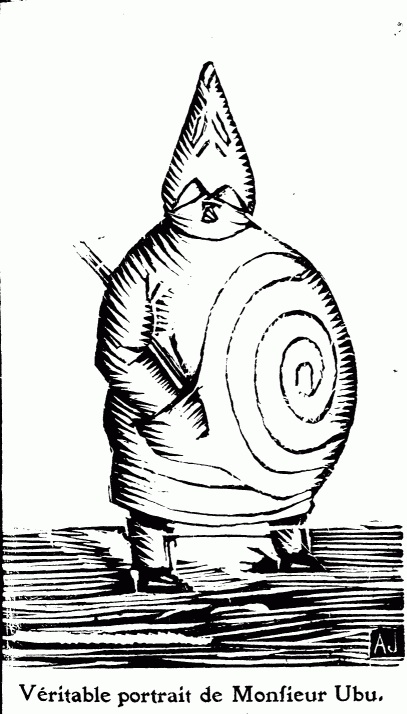
Alfred Jarry — often called a “forerunner to the Surrealists,” or listed as an inspiration to juniors like Guillaume Apollinaire, André Salmon, Max Jacob, or Pablo Picasso — is the prototypical Anarcho-Symbolist. Jarry’s life and art, his pranks and ’pataphysics, his absurdism and experimentalism, are a microcosm of this generation’s impetus and style.
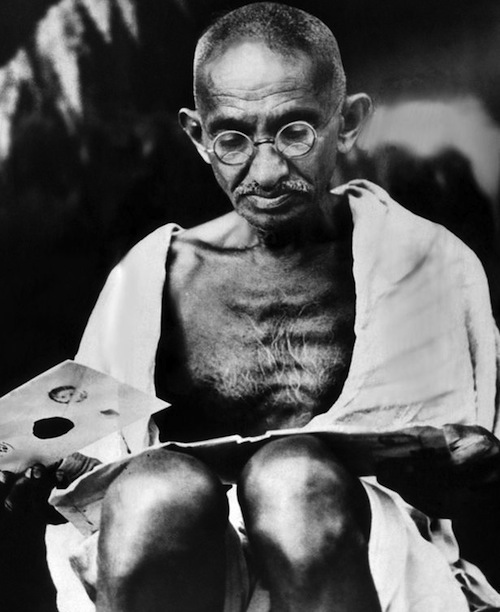
Notable anarchist members of this generation — including Emma Goldman, Alexander Berkman, Zo d’Axa, Rosa Luxemburg, Voltairine de Cleyre, Émile Henry, Gustav Landauer, Gaetano Bresci, Rudolf Rocker, Leon Czolgosz, Shūsui Kōtoku, Sante Geronimo Caserio, Michele Angiolillo, Luigi Lucheni, Alexandros Schinas, and Ricardo Flores Magón, plus honorary Anarcho-Symbolist Gabriele D’Annunzio — ranged from (often violent) radicals to reformers (like Mahatma Gandhi), and from staunch individualists to anarcho-syndicalists and -communists. But they agreed that human beings are capable of rationally governing themselves in a peaceful, cooperative, productive manner, and that government, exploitative owners of the means of production, despotic teachers, and domineering parents are all part of the problem.
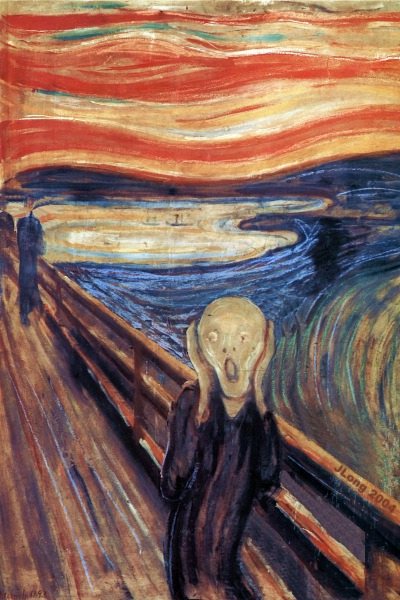
If anarchism was the ne plus ultra of Enlightenment political tendencies, the late-Romantic literary movement known as Symbolism was a quasi-occult mode of knowledge deliberately opposed to the positivism of the period. In his 1899 book The Symbolist Movement in Literature, which introduced French Symbolism (Rimbaud, Verlaine, Mallarmé) to the English-speaking world, Arthur Symons calls symbolism “a form of expression… for an unseen reality apprehended by the consciousness.” And in a 1900 essay, William Butler Yeats derided the realist trend (“scientific movement”) in literature and praised instead the symbolist tendency, because it “call[s] down among us certain disembodied powers, whose footsteps over our hearts we call emotions.” The artist, in this philosophy, is a hierophant communing with the occult truths hidden by the “veil” (a favorite term of Symbolists) called reality. Notable Symbolists of the 1864-73 cohort include Symons, Yeats, Paul Valéry, Henri de Régnier, Dmitry Merezhkovsky, Vyacheslav Ivanov, John Gray, Ernest Dowson, Zinaida Gippius, André Gide, Tadeusz Miciński, and Valery Bryusov. Plus: Edvard Munch.
A reminder of my 250-year generational periodization scheme:
1755-64: [Republican Generation] Perfectibilists
1765-74: [Republican, Compromise Generations] Original Romantics
1775-84: [Compromise Generation] Ironic Idealists
1785-94: [Compromise, Transcendental Generations] Original Prometheans
1795-1804: [Transcendental Generation] Monomaniacs
1805-14: [Transcendental Generation] Autotelics
1815-24: [Transcendental, Gilded Generations] Retrogressivists
1825-33: [Gilded Generation] Post-Romantics
1834-43: [Gilded Generation] Original Decadents
1844-53: [Progressive Generation] New Prometheans
1854-63: [Progressive, Missionary Generations] Plutonians
1864-73: [Missionary Generation] Anarcho-Symbolists
1874-83: [Missionary Generation] Psychonauts
1884-93: [Lost Generation] Modernists
1894-1903: [Lost, Greatest/GI Generations] Hardboileds
1904-13: [Greatest/GI Generation] Partisans
1914-23: [Greatest/GI Generation] New Gods
1924-33: [Silent Generation] Postmodernists
1934-43: [Silent Generation] Anti-Anti-Utopians
1944-53: [Boomers] Blank Generation
1954-63: [Boomers] OGXers
1964-73: [Generation X, Thirteenth Generation] Reconstructionists
1974-82: [Generations X, Y] Revivalists
1983-92: [Millennial Generation] Social Darwikians
1993-2002: [Millennials, Generation Z] TBA
LEARN MORE about this periodization scheme | READ ALL generational articles on HiLobrow.
Meet the Anarcho-Symbolists.
Honorary Anarcho-Symbolists: Gabriele D’Annunzio, Edvard Munch, Luis P. Senarens (all born 1863).
1864: Zo d’Axa (Anarchist), Alfred Stieglitz (Photo-Secessionist), Miguel de Unamuno (Philosopher), Henri de Régnier (one of the foremost French symbolists in the early 20th century), George Washington Carver (Inventor), Richard Strauss (Composer, Also sprach Zarathustra), Camille Claudel (French sculptor, mistress of Rodin), Thomas Dixon (Author, The Clansman), Maurice Leblanc (Novelist, creator of Arsène Lupin), Walther Nernst (Chemist, Third Law of Thermodynamics), Frank Wedekind (German expressionist playwright avant la lettre). Honorary Plutonians: John Jacob Astor (Philanthropist, died aboard the Titanic), Jim Beam (Bourbon baron), Nellie Bly (Journalist, Ten Days in a Mad-House), Max Weber (Sociologist, The Protestant Ethic), Wilhelm Wien (Physicist, Blackbody radiation), Henri de Toulouse-Lautrec (Post-Impressionist painter).
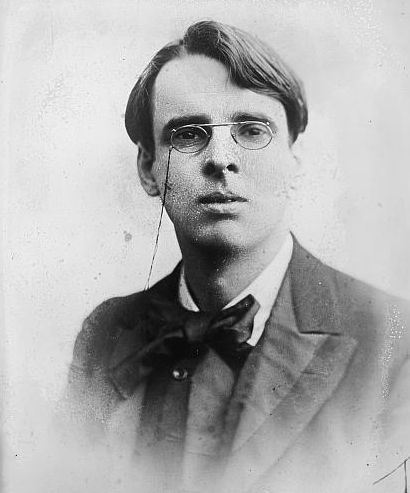
1865: William Butler Yeats (Anglo-Irish symbolist), Nikolai Marr (Soviet linguist), Arthur Symons (English symbolist poet), Irving Babbitt (Philosopher), George V (King of England, 1910-1936), Frederic W. Goudy (designer of Garamond and Goudy fonts), Warren G. Harding (29th US President, 1921-23), Rudyard Kipling (Author, The Jungle Book, plus Radium Age sci-fi), Jean Sibelius (Composer, The Swan of Tuonela), Dmitry Merezhkovsky (one of the earliest and most eminent ideologues of Russian Symbolism), M.P. Shiel (Radium Age SF author, decadent), Robert W. Chambers (American author, best-known for fantasy).
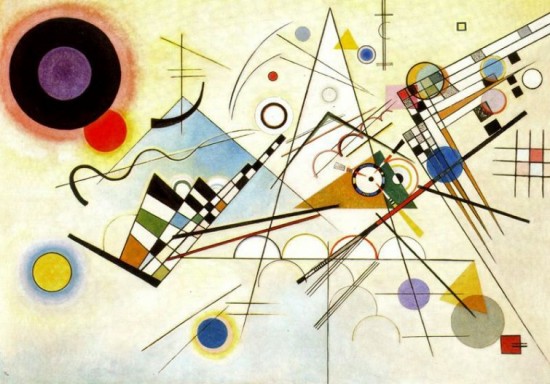
1866: Wassily Kandinsky (Abstractionist and theorist), Erik Satie (Composer), H.G. Wells (Author, The War of the Worlds), George Ade (journalist, proto-Modernist), Vyacheslav Ivanov (Russian symbolist), Sun Yat-sen (President of China, 1911-12), Beatrix Potter (Author-Artist), Lincoln Steffens (early muckraking journalist), Butch Cassidy (train and bank robber), Ramsay MacDonald (first Labour Prime Minister of UK), Matthew Henson (Explorer, possibly first to reach North Pole), Voltairine de Cleyre (Anarchist without an adjective, author of The Gods and the People, The Worm Turns, Anarchism, Direct Action), Benedetto Croce (Italian anti-Catholic and anti-Communist philosopher, multi-volume Philosophy of the Spirit), Anne Sullivan (Educator, The Miracle Worker), George Barr McCutcheon (Novelist, Brewster’s Millions), Ernest W. Brown (Astronomer, Tables of the Motion of the Moon), Sophonisba Breckinridge (Suffragette and abolitionist), Aby Warburg (Scholar), John Gray (English symbolist translator), Archibald Marshall (English novelist, publisher).
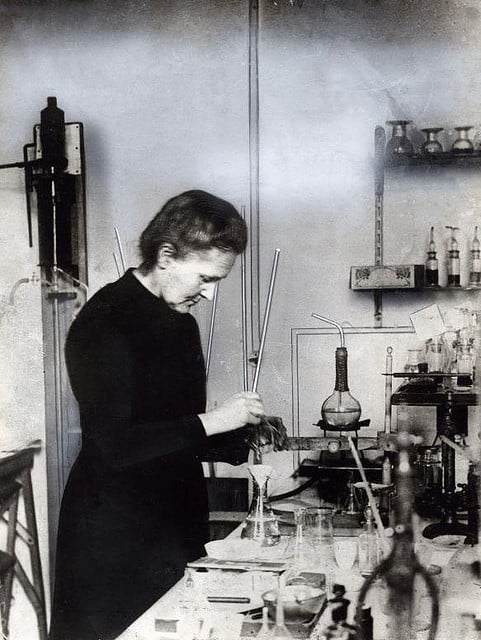
1867: Marie Curie (early nuclear chemist), Luigi Pirandello (Playwright), Wilbur Wright (co-inventor of the airplane), A.E. (George William Russell, Irish nationalist, writer, poet, painter), Maximilian (Emperor of Mexico, 1864-67), Frank Lloyd Wright (America’s most famous architect), Gustave Le Rouge (French SF author), Cy Young (Baseball pitcher), Arturo Toscanini (virtuoso conductor), Molly Brown (Activist, unsinkable), Edith Hamilton (Educator, The Greek Way), Carl Laemmle (Film/TV Producer), J. P. Morgan, Jr. (banking magnate), Arthur Rackham (British Golden Age children’s book illustrator), Sakichi Toyoda (founder of Toyota), Laura Ingalls Wilder (Author, Little House on the Prairie), Ernest Dowson (English symbolist and decadent).

1868: W. E. B. Du Bois (American philosopher, sociologist, prophetic Marxist, architect of civil rights and Black Pride), Stefan George (Poet), Maxim Gorky (Playwright), Gaston Leroux (French mystery, SF author), Tsar Nicholas II (last of the Russian Tsars), Alfred Fowler (Astronomer, celestial spectroscopy), George Ellery Hale (Astronomer), Felix Hoffmann (Chemist, aspirin and heroin), Scott Joplin (the King of Ragtime), Robert A. Millikan (Physicist, determined the charge of an electron), Eleanor H. Porter (Novelist, Pollyanna), Theodore W. Richards (Chemist, proved existence of isotopes), Edmond Rostand (Playwright, Cyrano de Bergerac), The Sundance Kid (Criminal), John Townsend (Mathematician, electron’s charge), John Stewart Barney (minor SF author), Dietrich Eckart (Nazi intellectual), Harvey Firestone (rubber tire baron).
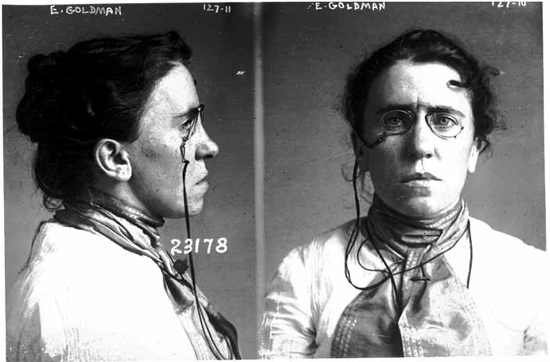
1869: Emma Goldman (Anarchist and feminist libertarian), Mahatma Gandhi (Activist, proselytizer of nonviolence, spiritual leader, anarchist), André Gide (Author, symbolist, The Vatican Catacombs), Bill Haywood (Labor leader, Industrial Workers of the World), Algernon Blackwood (Author), Zinaida Gippius (Russian symbolist), Neville Chamberlain (architect of appeasement), Herbert Croly (Author, The Promise of American Life), Typhoid Mary (notorious typhoid carrier), Stephen Leacock (Canadian political economist, humorist), Edgar Lee Masters (Poet), Henri Matisse (free, expressive French painter), Ernest Fox Nichols (Physicist, infrared radiation), Edwin Arlington Robinson (Poet), Booth Tarkington (Novelist, The Magnificent Ambersons), Gaetano Bresci (Italian-American anarchist, assassin of Italian King Umberto I).

1870: Alexander Berkman (Russian-American anarchist, A.B.C. of Anarchism, attempted to assassinate Frick), Gustav Landauer (German Anarchist), Lenin (revolutionary leader of Soviet Union), Arthur Fisher Bentley (American journalist, activist, scholar, pioneer in the study of group behavior), Alfred Adler (founder of Individual Psychology), Pierre Louÿs (French poet), Bernard M. Baruch (coined the term “Cold War”), Hilaire Belloc (Author, The Bad Child’s Book of Beasts), A. P. Giannini (founder of Bank of America), Adolf Loos (Architect, Ornament and Crime), Maria Montessori (founder of Montessori Education Method), H. H. Munro (Saki) (Novelist), Frank Norris (Novelist, The Octopus), Maxfield Parrish (American book and magazine illustrator), Jean Perrin (Physicist, verified atomic nature of matter).
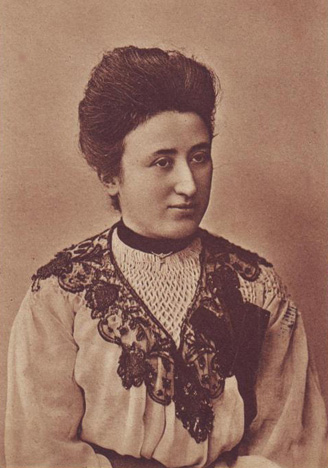
1871: Rosa Luxemburg (Anarchist; co-founder, Communist Party of Germany), Paul Valéry (last of the French Symbolists), Samuel Hopkins Adams (Journalist, “The Great American Fraud”), Shūsui Kōtoku (Japanese anarchist), Giacomo Balla (Italian futurist painter), Stephen Crane (Novelist, The Red Badge of Courage), Theodore Dreiser (Novelist), Marcel Proust (In Search of Lost Time), Rasputin (Russian mystic), Georges Rouault (Expressionist painter of clowns, Christs), Michele Angiolillo (Italian anarchist, assassinated Spanish Prime minister Cánovas), Ernest Rutherford (Father of Nuclear Physics), Frank Schlesinger (Astronomer, stellar parallaxes), John Millington Synge (Playwright, The Playboy of the Western World), Orville Wright (co-inventor of the airplane).
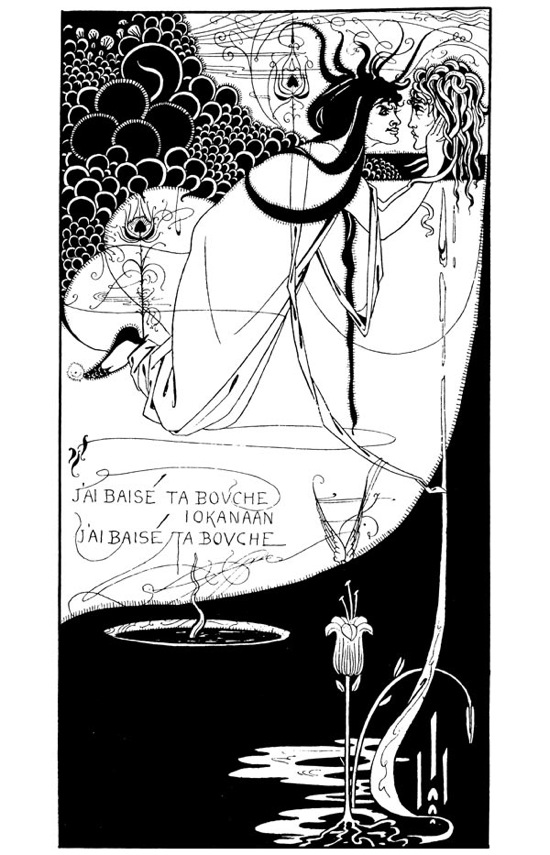
1872: Aubrey Beardsley (leading English illustrator, decadent), Max Beerbohm (English critic, parodist, caricaturist, decadent), Émile Henry (French anarchist, detonated a bomb at the Café Terminus in the Parisian Gare Saint-Lazare), Charles Greeley Abbot (Astronomer, solar energy), Roald Amundsen (Explorer, first to reach South Pole), Ma Barker (Criminal), L. L. Bean (Founder of L. L. Bean, Inc.), Léon Blum (thrice Prime Minister of France), Calvin Coolidge (30th US President, 1923-29), Willem de Sitter (Astronomer, expanding space), William Duddell (Physicist, electronic music), Paul Laurence Dunbar (Poet), Zane Grey (Novelist, Riders of the Purple Sage), Learned Hand (influential American justice), Marcel Mauss (Sociologist, The Gift), Piet Mondrian (Dutch abstract painter), John Cowper Powys (Novelist), Bertrand Russell (Philosopher, Mathematician, Atheist, Social Critic), William Monroe Trotter (Activist), Howard R. Garis (Novelist, Uncle Wiggily and Tom Swift series).
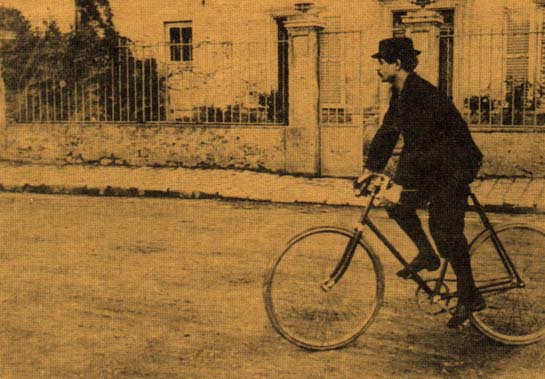
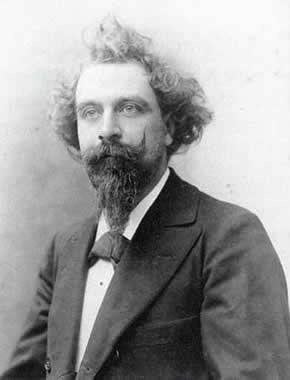
1873: Alfred Jarry (Playwright, inventor of the hilobrow science ‘Pataphysics), Inez Haynes Irwin (feminist, socialist, literary editor of The Masses, author of a Radium Age sf novel), Tadeusz Miciński (influential Polish symbolist, gnostic, a forerunner of Expressionism and Surrealism), Valery Bryusov (Russian symbolist), Rudolf Rocker (anarchist without adjectives), Enrico Caruso (operatic tenor nonpareil), Max Adler (Austro-Marxist philosopher), Sante Geronimo Caserio (Italian anarchist, assassin of Marie François Sadi Carnot, President of the French Third Republic), Willa Cather (Novelist), Colette (Novelist), Leon Czolgosz (Anarchist, President McKinley’s assassin), Walter de la Mare (Poet), Ford Madox Ford (Novelist, The Good Soldier), Arthur O. Lovejoy (Historian, The Great Chain of Being), Ricardo Flores Magón (Anarchist, agitator behind Mexican revolution), William Morris (Founder, William Morris Agency), Luigi Lucheni (Italian anarchist, killed Elisabeth of Bavaria, Empress consort of Austria and Queen consort of Hungary), Condé Nast (Founder of Condé Nast Publications), Emily Post (Columnist), Alexandros Schinas (Greek anarchist, exact birthdate unknown, assassinated King George I of Greec), Sergei Rachmaninov (Composer), Eliel Saarinen (Finnish-American art nouveau architect), Alfred E. Smith (twice Governor of New York), Charles Walgreen (founder of Walgreen Co.), Robert Wiene (Film Director, The Cabinet of Dr. Caligari), Adolph Zukor (founder of Paramount Pictures). Honorary Psychonauts: J.D. Beresford (British SF author), Hans Berger (Physicist, Electroencephalogram), William W. Coblentz (Astronomer, infrared spectroscopy), W. C. Handy (Father of the Blues), William E. Riker (Holy City cult leader), G. E. Moore (Philosopher, Principia Ethica).
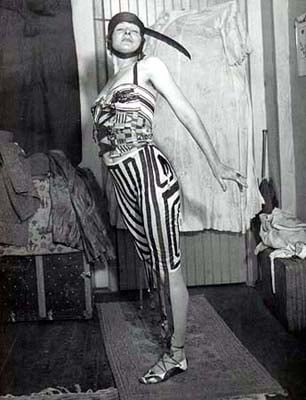
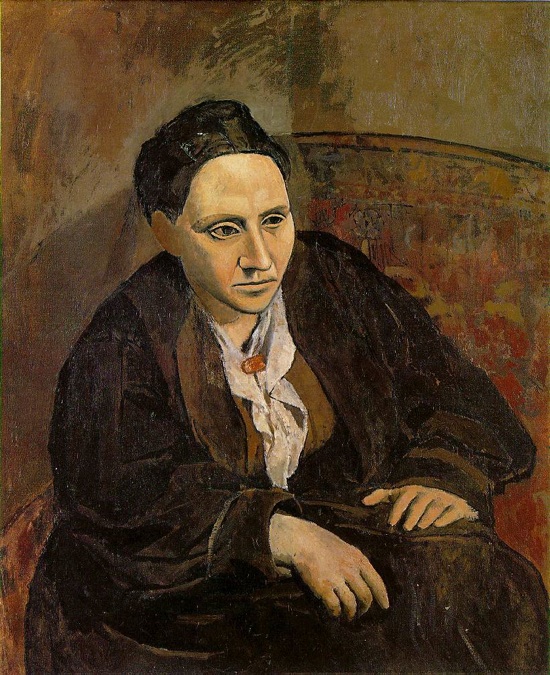
HONORARY ANARCHO-SYMBOLISTS: Gabriele D’Annunzio, Edvard Munch, Luis P. Senarens (1863); G.K. Chesterton, Amy Lowell, Gertrude Stein (1874), Elsa von Freytag-Loringhoven.
ANARCHO-SYMBOLISTS WHO ARE HONORARY PLUTONIANS: John Jacob Astor (Philanthropist, died aboard the Titanic), Jim Beam (Bourbon baron), Nellie Bly (Journalist, Ten Days in a Mad-House), Max Weber (Sociologist, The Protestant Ethic), Wilhelm Wien (Physicist, Blackbody radiation), Henri de Toulouse-Lautrec (Post-Impressionist painter).
ANARCHO-SYMBOLISTS WHO ARE HONORARY PSYCHONAUTS: J. D. Beresford, William W. Coblentz (Astronomer, infrared spectroscopy), W. C. Handy (Father of the Blues), William E. Riker (Holy City cult leader), Karl Schwarzschild (Astronomer, black holes).
Radium Age science fiction authors from this generation include: Gustave Le Rouge (La Conspiration des Milliardaires, Le Prisonnier de la Planète Mars, La Guerre des Vampires), Maurice Leblanc (The Three Eyes, The Tremendous Event), M.P. Shiel (The Purple Cloud, “The Future Day”), W.E.B. DuBois (“The Comet”), Gaston Leroux (The Machine to Kill), Rudyard Kipling (With the Night Mail, A Diversity of Creatures, “As Easy as A.B.C.”), H.G. Wells (Radium Age SF includes: The Food of the Gods, In the Days of the Comet, The War in the Air, The World Set Free, Men Like Gods), Inez Haynes Irwin (Angel Island), Archibald Marshall (Upsidonia), H.H. Munro (Saki) (The Chronicles of Clovis, When William Came), Howard R. Garis (wrote Tom Swift series as Victor Appleton), Samuel Hopkins Adams (The Flying Death), Alfred Jarry (“How to Construct a Time Machine”), Hilaire Belloc (Mr. Petre, But Soft — We Are Observed!), Ford Madox Ford (The Inheritors, with Joseph Conrad), Booth Tarkington (“The Veiled Feminists of Atlantis”), John Stewart Barney (L.P.M.: The End of the Great War), Stephen Leacock (“The Iron Man and the Tin Woman,” The Hohenzollerns in America), A.E. (George William Russell, The Avatars), and Robert W. Chambers (Police!!!). Note: J. D. Beresford (1874, Goslings, The Hampdenshire Wonder) is an honorary Psychonaut; so is Luis P. Senarens (1863, “Frank Reade, Jr., and His Steam Wonder,” et al). However, G.K. Chesterton (1874, The Napoleon of Notting Hill) is an honorary Anarcho-Symbolist.
ADVENTURE WRITER: Rudyard Kipling (Top 200: The Man Who Would Be King, Kim, With the Night Mail; Baroness Emma Orczy (Top 200: The Scarlet Pimpernel); H.G. Wells (Top 200: The Island of Doctor Moreau); Marie Belloc Lowndes (Top 200: The Lodger); André Gide (Top 200: Les caves du Vatican); Robert Erskine Childers (Top 200: The Riddle of the Sands); Zane Grey (Top 200: Riders of the Purple Sage); Cicely Hamilton (Top 200: Theodore Savage); Alfred Jarry (Top 200: Gestes et Opinions du Docteur Faustroll, Pataphysicien).
READ MORE essays by Joshua Glenn, originally published in: THE BAFFLER | BOSTON GLOBE IDEAS | BRAINIAC | CABINET | FEED | HERMENAUT | HILOBROW | HILOBROW: GENERATIONS | HILOBROW: RADIUM AGE SCIENCE FICTION | HILOBROW: SHOCKING BLOCKING | THE IDLER | IO9 | N+1 | NEW YORK TIMES BOOK REVIEW | SEMIONAUT | SLATE
Joshua Glenn’s books include UNBORED: THE ESSENTIAL FIELD GUIDE TO SERIOUS FUN (with Elizabeth Foy Larsen); and SIGNIFICANT OBJECTS: 100 EXTRAORDINARY STORIES ABOUT ORDINARY THINGS (with Rob Walker).