
1844-53: New Prometheans
By:
July 28, 2009
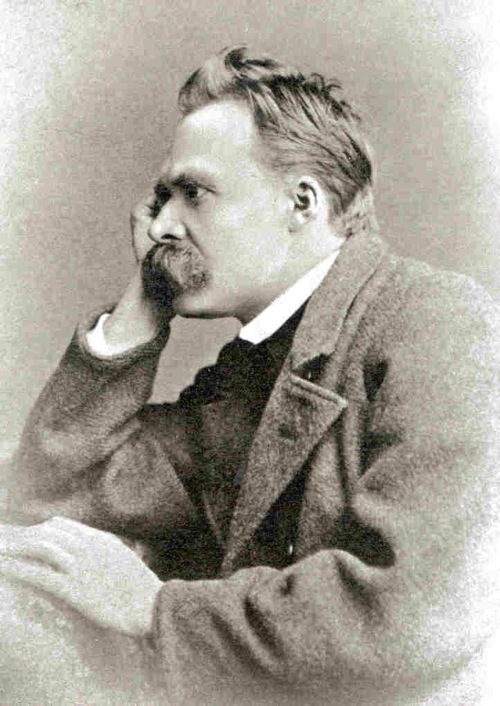
Members of this defiant, overreaching, iconoclastic generation were in their teens and 20s during the Eighteen-Sixties (1864-73, not to be confused with 1860s), and in their 20s and 30s during the Seventies (1874-83, not to be confused with the 1870s).
So named (by me) because of certain similarities to the Original Promethean cohort (1785-94), the New Prometheans — hi-, lo-, no-, and hilobrow members of which include Friederich Nietzsche, August Strindberg, Bram Stoker, Kate Chopin, Thomas Edison, Joris-Karl Huysmans, Comte de Lautréamont, Lucy Parsons, Oscar Wilde, Robert Louis Stevenson — is notable for its scientists and psychologists, who delved into dangerous areas of knowledge; for its thinkers and writers who rejected Victorian man’s faith that the world is systematic and subject to both reason and human control; and for its activists.
A reminder of my 250-year generational periodization scheme:
1755-64: [Republican Generation] Perfectibilists
1765-74: [Republican, Compromise Generations] Original Romantics
1775-84: [Compromise Generation] Ironic Idealists
1785-94: [Compromise, Transcendental Generations] Original Prometheans
1795-1804: [Transcendental Generation] Monomaniacs
1805-14: [Transcendental Generation] Autotelics
1815-24: [Transcendental, Gilded Generations] Retrogressivists
1825-33: [Gilded Generation] Post-Romantics
1834-43: [Gilded Generation] Original Decadents
1844-53: [Progressive Generation] New Prometheans
1854-63: [Progressive, Missionary Generations] Plutonians
1864-73: [Missionary Generation] Anarcho-Symbolists
1874-83: [Missionary Generation] Psychonauts
1884-93: [Lost Generation] Modernists
1894-1903: [Lost, Greatest/GI Generations] Hardboileds
1904-13: [Greatest/GI Generation] Partisans
1914-23: [Greatest/GI Generation] New Gods
1924-33: [Silent Generation] Postmodernists
1934-43: [Silent Generation] Anti-Anti-Utopians
1944-53: [Boomers] Blank Generation
1954-63: [Boomers] OGXers
1964-73: [Generation X, Thirteenth Generation] Reconstructionists
1974-82: [Generations X, Y] Revivalists
1983-92: [Millennial Generation] Social Darwikians
1993-2002: [Millennials, Generation Z] TBA
LEARN MORE about this periodization scheme | READ ALL generational articles on HiLobrow.
“There are things done today in electrical science which would have been deemed unholy by the very men who discovered electricity — who would themselves not so long before have been burned as wizards.” So opines Van Helsing, in Bram Stoker’s Dracula.
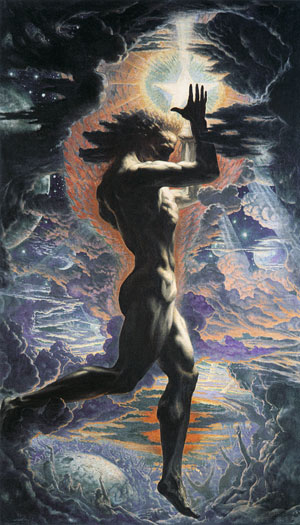
In Greek mythology, Prometheus was a son of the Titans, who created mankind out of clay, and was punished for stealing fire (understood metaphorically to mean: forbidden knowledge of writing, medicine, science, mathematics, agriculture; or any advanced technology) from Zeus. Because of Prometheus’ defiance and daring (metaphorically, for example in the works of Romantic poets like Shelley, Byron, and Goethe: the triumph of intellect over tyrannical church, monarchy, patriarchy), mankind is punished: In Hesiod’s version of the story, Zeus requires mankind to labor in order to survive. Hesiod also claims that after Prometheus’ theft of fire, Zeus sent Pandora to Prometheus’ brother Epimetheus, bearing a box (the original technological “black box”?) full of “evils, harsh pain and troublesome diseases which give men death.”
The defiance and daring of this generation, their scorn for religious, political, and sociocultural tyranny, not to mention the “proper” limits of knowledge, knew no limits. Two of the greatest New Prometheans — inventors Edison and Westinghouse — made stealing the fire from the gods not a metaphor but a reality. Nietzsche declared that God was dead; Lautréamont’s fictional character, Maldoror, has forsaken God and mankind. Parnell led the movement for Irish self-government; Louis Riel led two resistance movements against the Canadian government. Annie Besant was a women’s rights activist, and supporter of Irish and Indian self-rule; Lady Gregory was an important supporter of Irish cultural nationalism. Kate Chopin’s The Awakening (1899) portrayed the inner life of a woman who rejected her role as a businessman’s ornamental wife; it challenged conventional values and shocked many critics. Anarchists Albert and Lucy Parsons helped found the Industrial Workers of the World (Wobblies). Young members of the Decadent movement — in France, Joris-Karl Huysmans; in England, Oscar Wilde [honorary New Promethean] — declared themselves to be “against nature” itself. The James-Younger gang were guerrilla fighters turned outlaw; the anarchistic playwright Strindberg’s first play was titled The Outlaw.
Other members of this generation — Zeus-like — reacted violently against the New Promethean tendencies of the era (and against the influence of their immediate elders, the Original Decadent generation): Tsar Alexander III was a particularly retrograde monarch. Max Nordau’s Degeneration was an influential attack on so-called degenerate art, as well as a polemic against the effects of various social phenomena of the period, such as rapid urbanization. The term “comstockery,” meaning “censorship because of perceived obscenity or immorality”, is named after a New Promethean; while Carrie Nation claimed a divine ordination to promote temperance by smashing up bars.
Meet the New Prometheans:
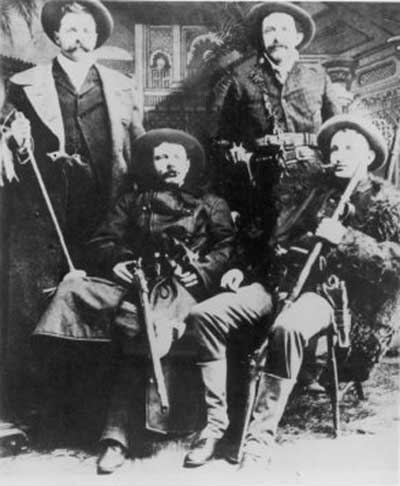
HONORARY NEW PROMETHEANS (born 1843): Frank James (bank robber, with James Gang), Pierre Lallement (French inventor of the bicycle), Gabriel Tarde (French sociologist — Group mind, Theory of Imitation — and author of one science fiction novel).
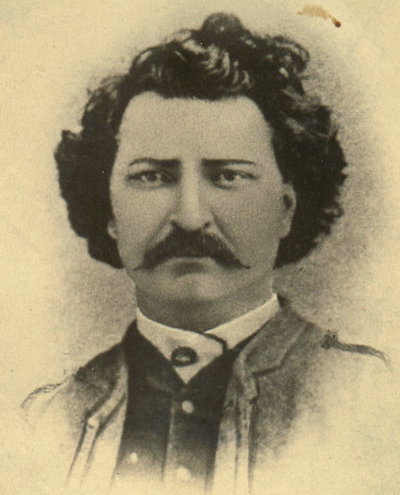
1844: Louis David Riel (founder of the province of Manitoba, led two resistance movements against the Canadian government), Friedrich Nietzsche (most influential philosopher of the era), Henri Rousseau (French painter of the exotic, one of the first avant-gardists), Sarah Bernhardt (French theatre actress, international sensation), Abdu’l-Bahá (Baha’i leader), Karl Benz (invented the automobile), Anthony Comstock (New York Society for the Suppression of Vice), Cassius Marcellus Coolidge (painted dogs playing poker), Henry J. Heinz (founder of Heinz Foods), Gerard Manley Hopkins (poet), Cole Younger (the brains of the James-Younger Gang), Malinda Cramer (American Christian mystic, founded the Church of Divine Science), James Guillaume (English anarchist) Aaron Montgomery Ward (founded Montgomery Ward). HONORARY ORIGINAL DECADENTS: Paul Verlaine (poet, leader of symbolist poetry movement), Anatole France (French novelist), Thomas Eakins (American realist painter), Mary Cassatt (American realist-impressionist painter).
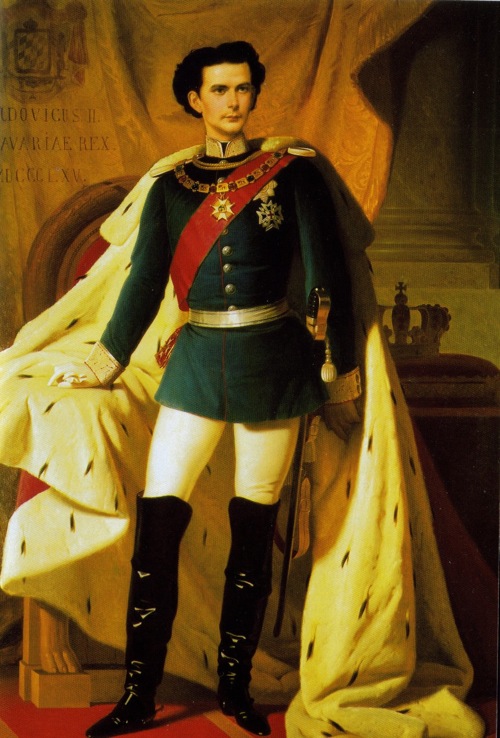
1845: Ludwig II (Mad King Ludwig of Bavaria, 1864-86), Tsar Alexander III (Tsar of Russia, 1881-94), Georg Cantor (Mathematician, founder of set theory), Walter Crane (British children’s illustrator), Wilhelm Conrad Röntgen (Physicist, discovered X-Rays).
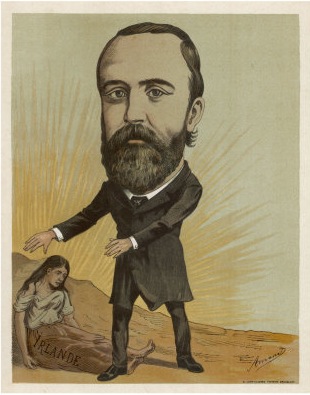
1846: Charles Stewart Parnell (Irish Nationalist leader), Comte de Lautréamont (Poet, Les Chants de Maldoror was a major influence on the Surrealists and Situationists), George Westinghouse (Inventor, Edison’s chief rival), F. H. Bradley (Philosopher, Appearance and Reality), Buffalo Bill (Wild West showman), Jack Daniel (Moonshine magnate), Karl Faberge (Maker of jewelry and gem eggs), Julian Hawthorne (Author), Godfrey Sweven (Author), Kate Greenaway (British illustrator), Wilhelm Maybach (designed the Mercedes), Carrie Nation (Temperance crusader), Henryk Sienkiewicz (Author, Quo Vadis?).
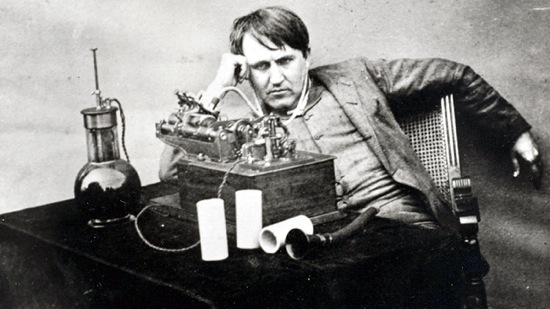
1847: Thomas Edison (inventor of the electric lightbulb and so much more), Alexander Graham Bell (supposedly invented the telephone), Bram Stoker (author, Dracula), Annie Besant (Theosophist & Social Activist), John Bates Clark (Economist, Philosophy of Wealth), Adolph Coors (Founder of Coors Brewery), Galileo Ferraris (Physicist, invented the induction motor), Jesse James (Bank robber, with James Gang), Joseph Pulitzer (Pulitzer Prize, dynamite inventor), Albert Pinkham Ryder (idyllic American painter), Paul von Hindenburg (namesake of zeppelin).
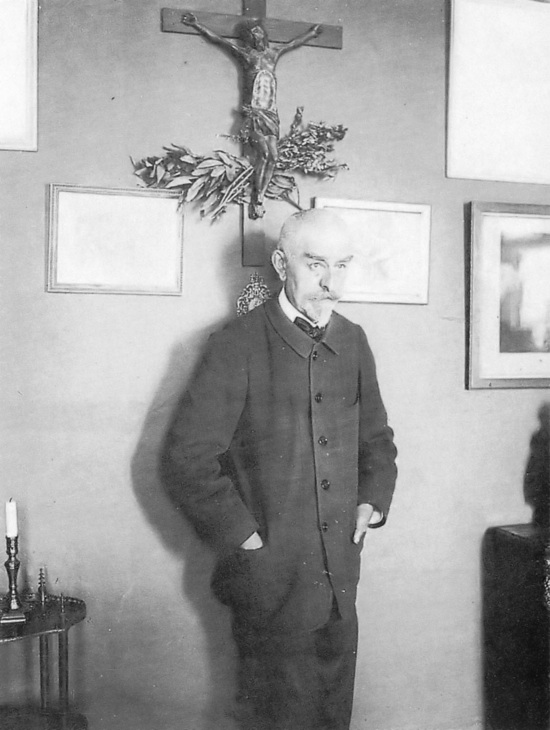
1848: Joris-Karl Huysmans (Decadent author, À Rebours), Brooks Adams (Historian, The Law of Civilization and Decay), Arthur Balfour (UK Prime Minister, 1902-05), Wyatt Earp (Gunfight at the O.K. Corral), Paul Gauguin (French post-impressionist painter), Henry Jenner (British scholar of the Celtic languages, Cornish cultural activist), Joel Chandler Harris (Novelist, Uncle Remus), Albert Parsons (Anarchist, Haymarket Martyr), Augustus Saint-Gaudens (Leading 19th c. American sculptor), Louis Comfort Tiffany (Stained glassmaker, jewelry designer).
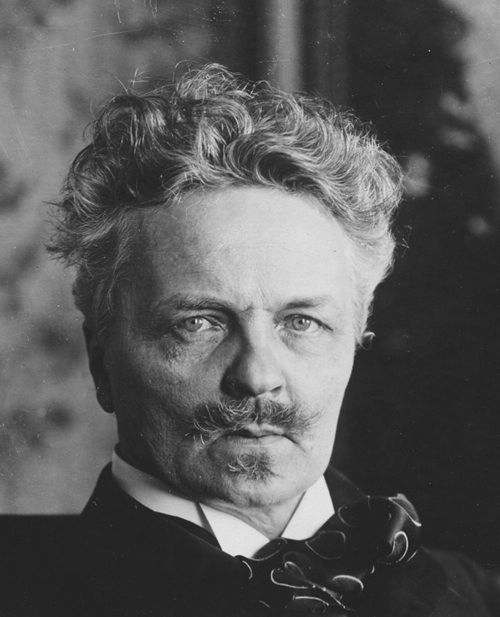
1849: August Strindberg (Playwright), Max Nordau (Zionist and cultural critic, Degeneration), Ivan Pavlov (Scientist, studied conditioned reflexes), Jacob A. Riis (Journalist, How the Other Half Lives), Charles F. Brush (Inventor, electrical pioneer), Luther Burbank (Botanist and plant breeder), Frances Hodgson Burnett (Novelist, Little Lord Fauntleroy), John Ambrose Fleming (Engineer, invented the vacuum tube), Henry Clay Frick (Robber baron, Johnstown flood), Sarah Orne Jewett (Author), Emma Lazarus (Poet), William Osler (Doctor, father of psychosomatic medicine), James Whitcomb Riley (Poet), Alfred von Tirpitz (German admiral, pushed U-boats), John William Waterhouse (British Pre-Raphaelite painter).
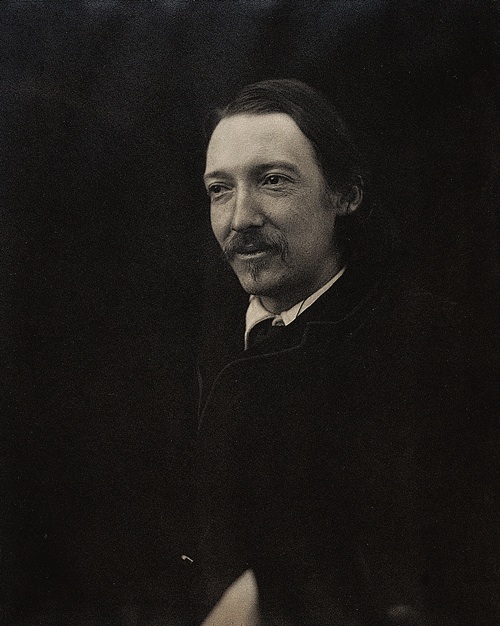
1850: Robert Louis Stevenson (Novelist, Treasure Island), Ferdinand Braun (Physicist, early developer of radio), St. Frances Xavier Cabrini (Missionaries of the Sacred Heart), Pat Garrett (killed Billy the Kid), Eugen Goldstein (Physicist, cathode rays), Samuel Gompers (first president of the AFL), Lafcadio Hearn (Author), Henry Cabot Lodge (US Senator from Massachusetts, 1893-1924), Tomas Masaryk (Czech President 1920-35), Guy de Maupassant (French short story writer), Octave Mirbeau (Novelist, Le Jardin des supplices), Charles Richet (Scientist, studied anaphylaxis and ectoplasm), Augusto Righi (Physicist, electromagnetic waves).
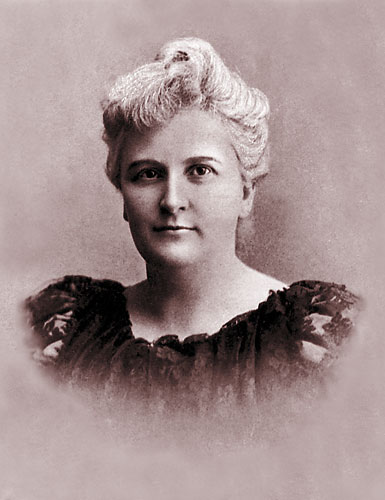
1851: Kate Chopin (novelist; The Awakening), Garrett P. Serviss (Astronomy popularizer, SF author), Melvil Dewey (Dewey Decimal System), Charles Dow (Journalist, Dow of Dow Jones), Ferdinand Foch (Allied Supreme Commander, WWI), Ernest Howard Griffiths (Physicist, Thermal Measurement of Energy), Charles Hires (Root beer), Doc Holliday.
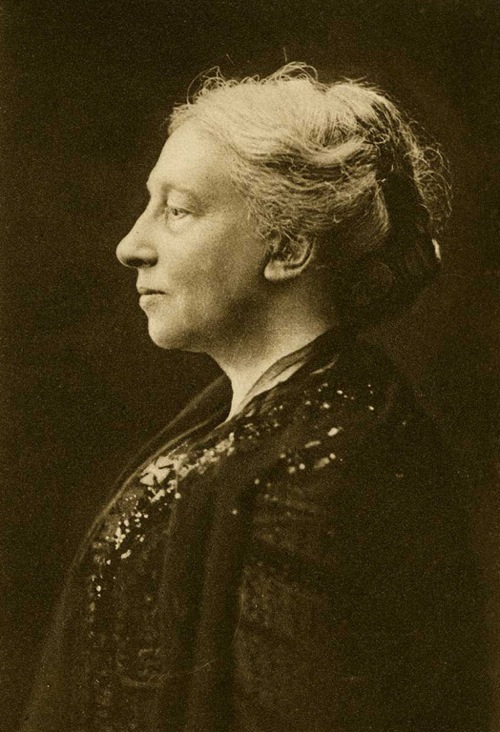
1852: Lady Gregory (playwright, Irish cultural nationalist), Henri Becquerel (physicist, discoverer of radioactivity), Calamity Jane (Performance Artist, Buffalo Bill’s Wild West Show), John Harvey Kellogg (Doctor, Battle Creek Sanitarium), Edwin Abbey (American artist in London), Herbert Henry Asquith (UK Prime Minister 1908-16), Antoni Gaudi (Architect), Robert Grant (Novelist, Unleavened Bread), Emperor Meiji (Emperor of Japan, 1867-1912), Albert A. Michelson (Physicist, calculated the speed of light), F. W. Woolworth (Five and dime magnate), E.P. Mitchell (newspaper editor, SF writer).
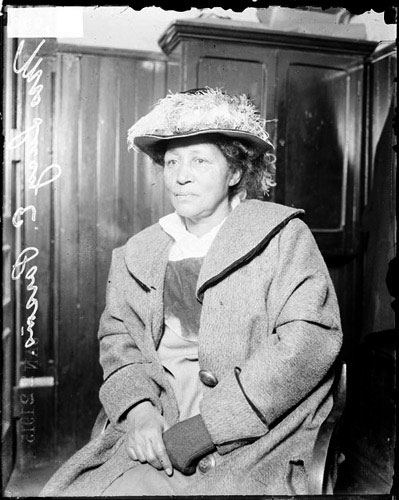
1853: Lucy Parsons (Anarchist labor organizer), Henri Alexandre Deslandres (Astronomer, spectroheliograph), Hendrik Lorentz (Physicist, theory of EM radiation), Bat Masterson (frontier peace officer), Heike Kamerlingh Onnes (Physicist, discovered superconductivity), Howard Pyle (Art Nouveau children’s book illustrator), Elihu Thomson (Inventor, electric welding and A/C motors). HONORARY PLUTONIANS: Cecil Rhodes (De Beers), possibly Vincent van Gogh (Post- or Neo-Impressionist painter).

HONORARY NEW PROMETHEANS (born 1854): Oscar Wilde (Irish playwright, dandy); Thomas A. Watson (assistant to Alexander Graham Bell); James L. Ford (author, theater critic, anti-highbrow).
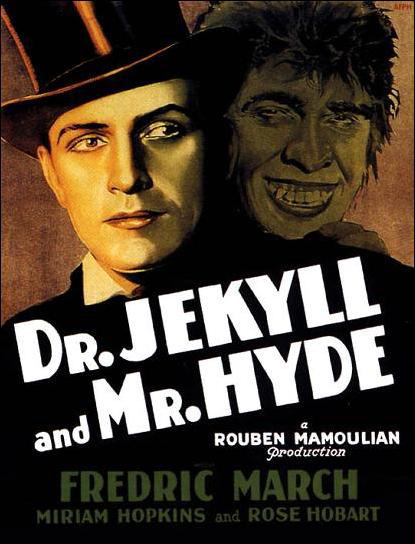
A note on New Promethean authors of Radium Age SF. Like the mother of modern SF, Mary Shelley (wife of Original Promethean Percy Shelley), who subtitled Frankenstein (1818) “The Modern Prometheus,” SF writers of the 1844-53 cohort question whether it’s wise for humankind to approach ever more closely the omniscience and omnipotence of God or Nature. Their fictions mirror contemporary anxieties about whether modern science and technology, from the actual (electrical devices) to the merely possible (robots), will ultimately prove helpful or harmful. New Promethean SF writers include: Robert Louis Stevenson (The Strange Case of Dr. Jekyll and Mr. Hyde; Jekyll is a prototypical overreaching scientist, dabbling in forbidden knowledge), Julian Hawthorne (“June, 1993,” The Cosmic Courtship), Godfrey Sweven (Riallaro, Limanora), Garrett P. Serviss (A Columbus of Space, The Second Deluge), Anatole France (“Through the Horn or the Ivory Gate,” The White Stone), George Haven Putnam (published Radium Age SF; wrote The Artificial Mother: A Marital Fantasy), and E.P. Mitchell (“The Man Without A Body,” “The Ablest Man in the World,” “The Story of the Deluge”). Also James L. Ford (honorary New Promethean), whose 1911 story “The Highbrow” suggests that the highbrow is a mutant species.
ADVENTURE WRITERS: Bram Stoker (Top 200: Dracula), Frances Hodgson Burnett (Top 200: The Lost Prince), Robert Louis Stevenson (Top 200: Treasure Island, Kidnapped).
READ MORE essays by Joshua Glenn, originally published in: THE BAFFLER | BOSTON GLOBE IDEAS | BRAINIAC | CABINET | FEED | HERMENAUT | HILOBROW | HILOBROW: GENERATIONS | HILOBROW: RADIUM AGE SCIENCE FICTION | HILOBROW: SHOCKING BLOCKING | THE IDLER | IO9 | N+1 | NEW YORK TIMES BOOK REVIEW | SEMIONAUT | SLATE
Joshua Glenn’s books include UNBORED: THE ESSENTIAL FIELD GUIDE TO SERIOUS FUN (with Elizabeth Foy Larsen); and SIGNIFICANT OBJECTS: 100 EXTRAORDINARY STORIES ABOUT ORDINARY THINGS (with Rob Walker).